Progress report for
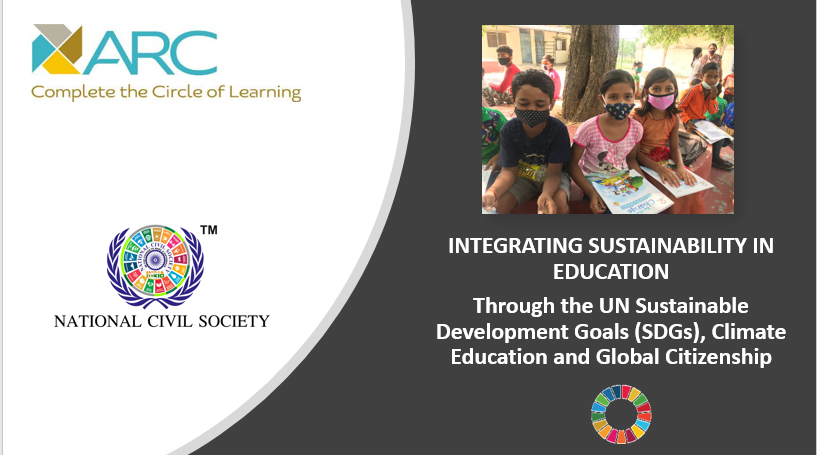
Achievement at a glance
The Sustainable Development Goals are a set of common goals set by the UN that function as a blueprint for making the world a better place. In September 2015, all 193 members of the United Nations adopted the Sustainable Development Goals. This "Agenda for 2030” is comprised of 17 Goals to drive development over the next 15 years by ending extreme poverty, tackling climate change and fighting inequalities. If there has ever been a time when it is crucial to come on a common platform and address these goals, it is now. SDGs not only make the students aware of the problems the world is facing but also implicitly imbibe values like leadership, kindness, gratitude and empathy in them.
Our solutions include student handbooks, teacher handbooks, digital programme and capacity-building workshops for teachers. These tools develop critical thinking and problem solving skills in students, and make them globally responsible citizens.
We started out with eight books for Grades 1 to 8 for one school in India in 2019. Two and a half years later, we have grown to 10 books, a full-fledged digital course for 50+ schools in India and the Middle East (such as Shining Star International School in Abu Dhabi) and have strong interest from schools in Portugal, Germany, Turkey and more. Ritu Malhotra is co-founder ARC and currently a fellow at International Sustainability Academy at Hamburg, Germany, which is supporting our mission to make climate education accessible to all. We are in talks with many schools in EU countries for implementing our programme. So far, we have reached over 150,000 students and 5,000 teachers from all sections of the society.
Challenges faced in implementation
-To introduce children to the United Nations’ 17 Sustainable Development Goals (SDGs) which are our world’s call to action on the most pressing global challenges.
-To equip children with the information and skills they need to grow up to be active global citizens and responsible stewards of the planet because by 2030, today’s children will be the decision makers.
-To include children in the ‘Largest Lesson in the World’, which is a call to action to end poverty, protect the planet and ensure that all people enjoy peace and prosperity by 2030.
-To empower children to invent, innovate, campaign, and meet the Global Goal targets.
Current challenges:
-We are seeking government support at the central and the state level to implement Education for Sustainable Development in all the schools.
-We need funding to implement our programme in various parts of the country.
-We need support to make the content accessible to children from all sections of the society.
Next Steps
1. Provide student handbooks for grade Nursery to grade 12.
2. Provide teacher handbooks to help teachers conduct the classes in a structured manner.
3. Do capacity building workshops for teachers to help them understand Sustainable Development Goals in detail and handhold them with detailed lesson plans.
Beneficiaries
1. All students from grade Nursery to grade 12.
2. School Teaching and Management Staff.
3. Working Professionals and their workplace-Partners.
Actions
Our uniquely designed books for schools are:
• graded for each class, across Grades Nursery to grade 12
• child-friendly, age-appropriate
• ready to use with simple worksheet formats and suggestions for extension activities
• practical and easily doable: each worksheet fits into the time frame of a single lesson/period
• linked to learning across subjects
• do not need a separate subject slot -- are easily embedded in the timetable
• Art integrated projects included